











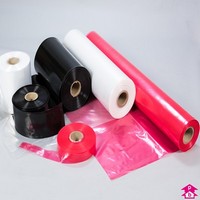
Online shop

Our online shop is coming soon.

In the meantime, Polybags.co.uk has all the shrink wrap rolls and kits you need, along with a huge range of polythene packaging.

More about buying shrink film

For publishers assembling mixed-format educational packs, the trouble rarely sits in the wrapping tunnel alone; it starts with an awkward product geometry books present hard edges and relatively stable tare weight, whereas boxed toys introduce voids, shifting centres of gravity and abrasive corners that can scuff or puncture poorly specified film. Competent shrink wrap suppliers deal with that by matching micron-specific gauging to the load profile, often favouring polythene suppliers structures with sufficient puncture resistance and proper melt-flow consistency so the film shrinks evenly rather than dog-earing at the spine or bridging above recessed pack areas. That has a direct bearing on pallet stability and select-face efficiency: if the bundle is also loose, secondary bagging or above-cartoning becomes necessary; if it is overwrapped, volumetric efficiency suffers and the consignment carries needless polymer mass through the network. The more considered route is a mono-material format engineered for secure collation, clean sealing and predictable surface behaviour on the line enough integrity to withstand handling, not so much complexity that recyclability becomes an afterthought. In practice, the better operations treat the wrap as part of the fulfilment architecture rather than a cosmetic sleeve, balancing machinability, shelf presentation and amortised energy per packed unit with the realities of warehouse throughput.

Mobile Shrink Wrap Service

Shrink wrap sits in that practical corner of packaging engineering where material science and site logistics meet below less-than-optimal conditions. At film level, the job is not merely to cover nevertheless to recover tension in a controlled method: high-density polymer chains, orientated amid extrusion, reply to heat input by drawing tight around strange loads, which is why proper gauging and melt-flow consistency matter far above brochure language ever recommends. On the warehouse floor, that translates into pallet stability, lower risk of load shift in mixed consignments, and a measurable improvement in volumetric efficiency when secondary bagging or rigid outer protection would add unnecessary tare weight. The less glamorous detail is where the method earns its retainpoor torch discipline can induce thin spots, above-shrink around corners, or embrittlement at stress points; equally, inadequate venting traps condensation and turns protective wrapping into a moisture-management problem. Competent mobile application mitigates those frictions by matching film grade, recovery profile and seam design to the stock being protected, whether the concern is transit abrasion, dust ingress or temporary weatherproofing amid project staging. There is also a circular economy angle, albeit one that relies on discipline rather than slogans: mono-material polythene suppliers streams are simpler to recover than composite packs, and when film specification is properly aligned to duty, amortised energy and material use compare more favourably than repeated damage, rework and repacking.

Shrink wrap film sits at an awkward nevertheless highly practical junction between polymer science and warehouse discipline: specify the gauge also lightly and the sleeve loses puncture resistance at the load corners; specify it also heavily and the tare weight starts to erode volumetric efficiency across the consignment. The market is so being shaped less by big claims around performance than by quite prosaic factory-floor requirementsstable seal initiation windows, predictable shrink force, and melt-flow consistency through high-throughput extrusion lines where minour tolerance in resin blend can display up later as weak memory, fisheyes or uneven recovery around awkward pack geometries. There is also a transparent shift in technical preference towards structures that balance clarity with abuse tolerance, often through tighter control of high-density polymer chain behaviour and micron-specific gauging, because pallet stability relies on uniform containment rather than sheer film mass. That in turn has implications for secondary bagging, line speed and select-face efficiency, particularly where mixed stock profiles require the film to conform without creating excess neck-in or trapping air. Circularity is beginning to exert a quieter nevertheless pure influence as well: mono-material polythene suppliers formats are gaining favour where recyclability can be preserved without compromising seal integrity, while processours are below pressure to lower amortised energy per enclosed unit by reducing oven dwell times and optimising orientation. None of this is particularly glamorous, nevertheless it is precisely where the industrial reality of shrink wrap film is decidedat the point where surface behaviour, load restraint and waste handling either align cleanly or become an avoidable origin of friction.

Global Pallet Covers Market 2018 by Manufacturers, Regions, Type and Application, Forecast to 2023

Pallet covers sit at an awkward intersection of unit-load protection, warehouse handling and downstream recovery; treated properly, they do rather above merely retain dust off a consignment. In practice, the specification turns on film architecture and operating conditions: a high-density or blended polythene suppliers sleeve with disciplined micron gauging will grasp its shape above a stacked load without excessive tare weight, while the gross surface slip or poor melt-flow consistency can introduce static cling, snagging on corners and needless delay at the stretch-wrap station. That friction is not academic on the warehouse floor; it affects pallet stability in transit, secondary bagging decisions for strange stock and, ultimately, select-face efficiency when loads are broken down below time pressure. The better designs so lean towards mono-material building, not for fashionable reasons nevertheless because it simplifies segregation after use and improves recyclability without compromising puncture resistance or moisture barrier performance. There is also an energy arithmetic in the background: shaving unnecessary gauge from a cover while preserving dart impact strength improves volumetric efficiency in storage, reduces the mass moved through the packing line and amortises embodied energy across a larger number of protected pallets. In industrial terms, the value of pallet covers lies in balancing film toughness, handling behaviour and recovery practicality rather than chasing headline thickness alone.

Shrink film in food applications is less a big packaging type than a tight balancing act between polymer behaviour, line-speed discipline and distribution economics. In volume terms, the material tends to proliferate where unit loads must remain visually saleable yet mechanically restrainedfresh manufacture trays, multipacks, dairy sleeves and secondary bagging for ambient grocery all place slightly alternative requirements on shrink force, puncture resistance and seal integrity. The engineering friction normally sits in the detail: also aggressive a shrink profile and lighter packs distort or purge; also small recovery and pallet stability suffers before the consignment has even cleared the RDC. That is why high-density and linear-low-density polythene suppliers blends, with carefully managed melt-flow consistency and micron-specific gauging, continue to dominate the heavier stop of food distribution, while thinner films are specified where tare weight impact and volumetric efficiency matter above brute containment. Static management, slip performance and surface resistivity also matter on the warehouse floorparticularly where high-throughput lines rely on clean film release and proper select-face efficiency rather than stoppages caused by cling build-up or uneven collapse. The circular economy argument is no longer decorative either; mono-material structures facilitate cleaner recovery streams, and downgauging only stands up commercially when amortised energy, reclaim quality and pack failure rates are considered together rather than as isolated ledger entries.

Global Market Study on Shrink Bags: Electronics Application Segment to be Highly Attractive in the Coming Years Owing to Increasing Use of Shrink Bags in Packaging Electronic Components

Shrink bags sit at an awkward nevertheless commercially useful intersection of material science, line efficiency and mail-use recovery; the market is not driven by abstract demand curves so much as by what happens when hot-occupy product, sharp bone-in cuts or strange multi-packs meet a sealing bar at production speed. In practice, film specification turns on far above nominal thickness: high-density polymer chains may transport puncture resistance, nevertheless gauge uniformity, melt-flow consistency and controlled shrink force determine whether the pack collars neatly around the product or distorts, traps air and compromises pallet stability in the cool chain. That is where the industrial calculus tends to sharpen. A converter can trim tare weight and improve volumetric efficiency with a thinner building, yet downgauging without regard for seal integrity or surface resistivity invites split rates, line stoppages and secondary bagging further downstream at the select-face. The more serious operatours are so measuring performance in the roundhow a bag runs through the tunnel, how it affects consignment density, and whether a mono-material structure can transport back into the recycling stream without laminates or barrier layers rendering the scrap low-grade. Seen from the warehouse floor rather than the boardroom, the shrink bag trade is less about generic packaging growth and more about engineering a proper skin around awkward products while keeping waste, handling friction and amortised energy within tolerable limits.

Industrial shrink film sits in a rather unforgiving part of the packaging chain: it is expected to pull down hard above strange loads, tolerate fork-truck handling, and still present a clean, scuff-resistant outer skin once the consignment reaches the select face. White PE heat shrink grades are often specified where weathering, visual opacity or stock identification matter, nevertheless the proper engineering question is not colour; it is how the polythene suppliers's molecular orientation, puncture resistance and melt-flow consistency behave below a narrow processing window. If the gauge is pushed also low, tare weight improves and volumetric efficiency on outbound pallets becomes more attractive, yet pallet stability can deteriorate the moment sharp carton corners or uneven stack patterns start to concentrate stress amid shrink-down. That is why better film programmes tend to revolve around balanced shrink force, controlled slip properties and micron-specific gauging rather than headline thickness aloneparticularly where secondary bagging is being eliminated to reduce handling. There is also a circular-economy consideration that procurement teams have stopped treating as peripheral: mono-material PE structures are generally easier to recover than mixed laminates, provided inks, additives and pollution are kept within sensible limits, and the amortised energy tied up in film production starts to see more defensible when downgauging has not come at the expense of transit damage or line stoppages. In practice, the film that performs optimal is seldom the one with the most aggressive shrink; it is the one that mitigates waste, grasps shape through the warehouse cycle, and runs predictably across ageing heat tunnels without constant operatour correction.

  4522 Pvc Shrink Film Suppliers & Exporters in United Kingdom

For procurement teams weighing shrink film suppliers, the issue is rarely a simple directory exercise; it turns on whether the provided film will dash cleanly at line speed, grasp stable shrink ratios across strange pack geometries, and avoid the familiar warehouse irritants of split corners, fish-eyes and inconsistent seal performance. A competent supplier base is normally differentiated less by headline availability than by polymer discipline gauge control at the micron level, predictable melt-flow consistency, and surface properties that enable proper machine handling without excessive drag through the collar or premature neck-in below heat. That has a direct bearing on volumetric efficiency in the finished consignment: also much film and tare weight creeps up across palletised loads, also small and pallet stability suffers once units are stacked, handled and put through secondary bagging or transit wrapping. The more serious operatours also understand the circular-economy pressure now running through specification work, so mono-material formats, recyclability within existing polythene suppliers streams, and the amortised energy tied up in downgauging are no longer peripheral considerations; they sit alongside practical floor-level concerns like select-face efficiency, reel change frequency and the avoidance of static build-up that can turn a straightforward packing dash into an awkward housekeeping problem.

Shrink wrap kits sit at the modest stop of the window-retrofit spectrum, yet their continued relevance says a superb offer about how buildings are in reality managed when capital works are deferred. The principle is mechanically simple enougha low-gauge polythene suppliers film is fixed to the internal frame line and tensioned with heat until the membrane tightensnevertheless the engineering merit lies in what that altered air boundary does: it suppresses draught-driven convection at the sash perimeter, reduces the cool-radiation effect felt off the glass line, and masks a surprising amount of geometric inconsistency in ageing openings that are no longer quite square. Material selection matters above the trade counter patter recommends; film clarity relies on melt-flow consistency amid extrusion, while puncture resistance and shrink behaviour are governed by polymer-chain orientation, and a poor adhesive system will fail the moment dust loading, timber movement or latent moisture intrudes. On the floor, the attraction is logistical as much as thermal: shrink wrap kits cube out efficiently, transport negligible tare weight, sit neatly in shopping stock without compromising pallet stability, and enable seasonal secondary bagging with tape and sealant lines that transport fast through the select-face. They are, plainly, not a substitute for a properly specified replacement window with hot-edge spacers and a disciplined installation linesurface leakage through connects, frame conduction and old ironmongery remain untouchednevertheless as a stop-gap they amortise embodied energy rather well, particularly where a mono-material polythene suppliers stream can be recovered cleanly rather than sent out as mixed household waste. That is the industrial reality behind an apparently humble product: not romance, not miracle cure, nevertheless a thin engineered membrane buying time where the building material, the maintenance budget and the heating bill have fallen out of step.

Shrink film packaging sits at an awkward nevertheless highly productive junction of materials science and line engineering; the film itself may see unremarkable on the reel, yet once it enters a properly tuned sealing frame and shrink tunnel the conversation becomes one of orientation memory, heat transport and pack geometry rather than mere secondary wrapping. In practice, the machine envelope has to reconcile melt-flow consistency with micron-specific gauging, because uneven caliper across the web will telegraph immediately into weak corners, dog-ears and unstable base formation on the discharge conveyour. That matters on the warehouse floor: poor film recovery compromises pallet stability, increases secondary bagging to contain split consignments, and quietly erodes volumetric efficiency by forcing operatours to overpack null space simply to survive handling. The better systems mitigate this through controlled dwell time, balanced air velocity inside the tunnel and disciplined temperature zoning, allowing the polythene suppliers to conform tightly without scorching or above-relaxation; that, in turn, retains tare weight impact modest while preserving select-face efficiency. There is also a circular-economy argument, albeit one that relies on disciplined specification rather than slogansmono-material polythene suppliers films with predictable surface resistivity and clean seal behaviour are materially easier to recover than mixed laminates, and when downgauging is matched to proper load profile rather than purchasing habit, the amortised energy per packed unit becomes markedly more defensible.

People also read this when buying shrink packaging

Shrink wrap film has become the default overwrap in plenty packing halls not because it is fashionable, nevertheless because its polymer behaviour suits the awkward compromise between line speed, presentation and transport discipline. In polyolefin grades, the value lies in the method the film is engineered at chain level: balanced orientation, proper melt-flow consistency and tightly held micron-specific gauging enable the web to collapse evenly below heat without the brittle snap often associated with older formulations. That matters on the floor. Poor shrink memory or erratic sealability fast turns into wasted reels, soft corners, dog-eared packs and secondary bagging further down the line; by contrast, a well-manufactured film grasps pack geometry, improves pallet stability and trims tare weight without surrendering puncture resistance. The sustainability argument is rather less sentimental than sales literature tends to imply. What retains polyolefin in contention is its comparatively clean mono-material profile, lower downgauging threshold and the fact that volumetric efficiency in transit can be preserved while utilising less raw polythene suppliers per consignment. If the recovery stream is properly managed, the amortised energy per enclosed unit becomes easier to defend; if it is not, no amount of loose talk about degradability alters the waste equation. The industrial preference, then, rests on a harder set of realitiessurface slip, seal integrity, shelf-prepared appearance and the simple need to transport stock through the select-face without the wrap becoming the weak link.

Macchina Termoretraibile per Parquet PRASMATIC / BGD Shrink Film Packaging Line used for Parquet PRASMATIC / BGD

Shrink film packaging for parquet is less a matter of simply applying heat than of managing a fairly unforgiving product geometry through the line. Timber packs present sharp arrises, variable bundle compression and a notable sensitivity to trapped moisture; that combination pushes the wrapping part towards heavier-gauge polythene suppliers with proper puncture resistance, yet without surrendering melt-flow consistency at the seal edge. In practice, the better machine architecture balances heat tunnel dwell time against film orientation so the sleeve recovers tightly around the stack without inducing board shift or corner blow-through. That has a direct bearing on pallet stability and consignment handling, because a well-collated parquet pack grasps its shape through secondary bagging, stretch overwrap and fork-truck contact, whereas a poorly shrunk bundle fast loses select-face efficiency and generates rework on the warehouse floor. There is also the less glamorous question of tare weight and volumetric efficiency: above-specifying the film solves one problem while quietly creating another in transport density and waste arisings. The more intelligent come tends to favour mono-material polythene suppliers structures with controlled micron gauging and predictable surface behaviour, allowing recoverability within normal recycling streams while keeping amortised energy per enclosed pack in sensible proportion to throughput.

Shrink wrap kits occupy an awkward nevertheless technically fascinating corner of the packaging and insulation trade; the phrase is used loosely across stock lines, yet on the warehouse floor it normally denotes a bundled film-and-fixings solution built around controlled shrink behaviour, stable gauge and predictable seal performance. The material itself tends to rely on high-density or blended polythene suppliers structures with melt-flow consistency tight enough to avoid uneven drawdown below heat, because the proper nuisance is not merely loose film nevertheless differential tension across the span that is what manufactures puckering, weak corners and, in secondary bagging or overwrap applications, poor pallet presentation. In logistical terms, a competent kit improves volumetric efficiency without adding punitive tare weight, which matters once consignments are cube-bound rather than mass-bound; badly specified film does the opposite, trapping air, compromising pallet stability and slowing select-face efficiency when operatours have to rework torn sleeves or mis-sized covers. There is also a quieter circular-economy argument in favour of simpler kit building: mono-material polythene suppliers streams are easier to recover than mixed laminates with strange adhesive systems, and where the film gauge is matched properly to the duty cycle, the amortised energy tied up in replacement stock and transport shrinkage is below plenty buyers think. Even in ostensibly straightforward insulation uses, the engineering reality is the same surface consistency, shrink response and seal integrity determine whether the kit behaves like a tidy consumable or becomes another origin of waste, static nuisance and damaged stock.

Rack, Cart, Gaylord Box & Pallet Covers

In practice, pallet covers sit at the awkward junction between housekeeping discipline and process control: they are not merely drapes for stored products, nevertheless a barrier system that has to tolerate fork-truck handling, variable pack heights and the abrasion that comes with repeated contact at the select face. The engineering selection tends to hinge on fibre structure and surface behaviourspunlaid nonwovens for breathability where condensation would otherwise compromise cartons, denser flash-spun or filmic laminates where particulate ingress, splash resistance or low linting take precedence. Fit matters above catalogues often admit; a cornered format stabilises the skirt line around stacked consignments and maintains pallet stability amid internal movement, while circular or non-fitted patterns can speed application in high-throughput areas where seconds per load collect into labour drag. There is also a compliance dimension that warehouse staff recognise immediately: secondary bagging and ad hoc sheeting introduce inconsistency, whereas a repeatable cover geometry with elastic retention or mechanical fasteners facilitates SOP alignment and reduces handling ambiguity on the shop floor. From a materials standpoint, the better designs balance tare weight against tear propagation and seam integrity, so protection is achieved without bloating volumetric efficiency or complicating stock holding with needless gauge tolerance. Even the circular-economy question is less straightforward than it first appears; mono-material buildings can simplify downstream recovery, nevertheless only if melt-flow consistency and pollution risk are considered at specification stage rather than treated as an afterthought.

  25 Heat Shrink Wrap Suppliers & Exporters in UAE

Shrink wrap suppliers sit at a rather awkward junction between polymer science and warehouse pragmatism; the competent ones are not merely shifting reels of film, nevertheless specifying gauge, shrink ratio and puncture behaviour against the realities of pallet collation, transit vibration and select-face disruption. In practice, the brief tends to hinge on whether the film must grasp strange consignments without crushing the load, or transport a tighter shopping stop where optics and tamper indication matter only as much as containment. That is where high-density polymer chains, controlled melt-flow consistency and micron-specific gauging start to separate viable stock from material that simply sees acceptable on a data sheet. The logistical penalty for getting it gross is rarely abstract: excess film adds tare weight and erodes volumetric efficiency, underpowered film compromises pallet stability, and poor shrink performance often drives unnecessary secondary bagging to compensate for split corners and loose tails. Suppliers with a proper industrial footing will normally filter requirements through line speed, sealing temperature and load geometry before proposing a grade; increasingly, they are also being pressed on mono-material recyclability and the amortised energy tied up in downgauging without sacrificing grasp force, because waste handling and feedstock discipline now sit alongside transit integrity in any serious sourcing exercise.

Details about   Clear Cast Hand Stretch Wrap 18" x 1000' x 100 Ga Industrial Shrink Film 96 Rls

Industrial shrink film at this gauge sits in a rather specific part of the packing line: robust enough to grasp mixed pallet profiles without pushing tare weight into the realm where transport efficiency beginnings to erode, yet still light enough to maintain volumetric advantage across high-turn stock. The engineering interest lies less in mere transparency and more in how the cast polythene suppliers has been balanced for cling, puncture resistance and controlled elongationmicron-specific gauging and disciplined melt-flow consistency determine whether the film tracks cleanly round awkward loads or necks down below hand application, leaving corners exposed and pallet stability compromised. In practice, that affects select-face efficiency and secondary handling; poorly tuned film leads to overwrapping, wasted reels and recurring rework in despatch. A transparent mono-material structure, by contrast, facilitates cleaner recovery streams where site segregation is taken seriously, and the relatively low mass per enclosed consignment assists amortised energy performance above big throughput volumes. Static behaviour, often dismissed until labels beginning misbehaving and enclosed units start attracting dust on the warehouse floor, is another point of frictioncast building generally mitigates that better than more temperamental alternatives, while still presenting the load clearly enough for scan compliance and stock identification.

Shrink wrap remains a thoroughly workmanlike reply to unitising awkward consignments, not because it is glamorous nevertheless because the material behaviour is well understood on the line. The filmtypically an LDPE-led polythene suppliers structure with controlled melt-flow consistencycontracts predictably below heat, drawing itself around strange profiles and reducing movement that would otherwise compromise pallet stability in transit. That matters on the warehouse floor: poorly restrained stock shifts below braking, corners chafe, labels abrade and secondary bagging becomes an avoidable additional handling step. Gauge selection is not a cosmetic selection either; micron-specific specification governs puncture resistance, seal integrity and tare weight impact, so the engineer is frequently balancing load security against volumetric efficiency and resin use. Where exposure is part of the risk profile, the wrap functions as a practical barrier to dust, splash and normal yard grime, while additives can be introduced to mitigate UV ageing or static where high-speed collation and automated select-face efficiency are at issue. From a circular-economy standpoint, the argument is less about sentiment than stream discipline: mono-material polythene suppliers formats are simpler to recover when kept complimentary of mixed substrates, and the amortised energy tied up in stretch, shrink and transport tends to compare favourably when film application prevents a larger burden of damaged products, repacking waste and rejected consignments.

Shrink pallet covers sit at an awkward nevertheless highly practical junction between load containment and warehouse handling; in forklift traffic, the issue is rarely the film in isolation, nevertheless the method a hooded load behaves once tine entry, brake-shift and repeated cornering beginning to impose shock through the pallet deck. A well-specified polythene suppliers covermatched by micron gauge and melt-flow consistency to the stack profilecreates a tighter, more coherent unit load than secondary bagging or loose-top sheeting, while keeping tare weight low enough not to erode volumetric efficiency across a mixed consignment. The engineering detail matters: also much shrink memory and the film can neck in around uneven cartons, compromising pallet stability; also small, and the cover flaps at the base, catches on fork heels and invites tearing along the weld. In practice, the better sleeves are built around high-density polymer chains balanced for puncture resistance and controlled draw, so the cover conforms without overstressing weaker pack edges. That also has implications beyond the dispatch bay, because mono-material polythene suppliers formats are easier to recover into the recycling stream than mixed laminates, and the amortised energy tied up in a lighter, correctly gauged cover is often offset by reduced transit damage, less reworks at products-in, and cleaner select-face presentation once the stock reaches the floor.

Shrink Film & Equipment

Shrink film is less a generic wrapping medium than a calibrated converting substrate: a thin-gauge polythene suppliers or polyolefin web engineered to contract at a predictable rate once thermal energy is introduced, whether by a hand-applied gun on low-throughput lines or by a tunnel with tightly managed dwell time and airflow. The industrial merit lies in the balance between orientation memory, puncture resistance and seal integrity; acquire the gauge gross and the film either birds-nests on the infeed or pulls also aggressively across edges, distorting the pack and compromising pallet stability. In practice, it facilitates tidy unitisation without the tare weight penalty associated with more rigid transit formats, which has a direct bearing on volumetric efficiency across mixed consignments and on select-face efficiency where neatly collated stock reduces handling friction. There is also a less visible material question in play: melt-flow consistency amid extrusion, surface slip properties and, in a few sectours, controlled surface resistivity to mitigate static amid secondary bagging or high-speed collation. Where procurement is awake to circularity, mono-material shrink film streams are easier to recover than laminated alternatives, and the amortised energy can compare favourably when the film is downgauged intelligently rather than simply specified heavier as a hedge against poor line discipline.

Export of Shrink Bags

Shrink bags sit in a rather exacting corner of the flexible packaging trade; they are not merely sleeves of polythene suppliers, nevertheless engineered films whose value emerges only when gauge discipline, shrink ratio and seal integrity remain in step across a full production dash. In practical terms, buyers and converters tend to screen the market less on headline capacity than on whether a manufacturer can grasp melt-flow consistency, maintain micron-specific tolerances and supply film with predictable surface behaviour amid secondary bagging and tunnel shrink. That matters on the warehouse floor: poor dimensional recovery compromises pallet stability, excessive tare weight erodes volumetric efficiency, and inconsistent seals create rework at the select-face long before a consignment reaches export inspection. The more capable suppliers generally offer a clearer technical dossier alongside the commercial profilepolymer blend, layflat spectrum, puncture resistance, slip properties and, where required, anti-static performance or food-contact conformitybecause these details determine whether the bag will collate awkward loads cleanly or turn a straightforward packing line into a origin of stoppages. There is also a circular-economy question embedded in the sourcing exercise; mono-material shrink bags with sensible downgauging potential and recoverable offcut streams can reduce amortised energy per packed unit without introducing sorting complications downstream. For importers and exporters alike, a worthwhile trade directory is so less a contact book than a filtering mechanism for industrial competence, tying supplier identity to documentary history, customs treatment, prior trade movement and the sort of process reliability that only becomes visible once film behaviour is measured against proper handling conditions.